Plastic T-shirt bag making machine
1.Plastic bag making machine is suitable for high density polyethylene (HDPE), the low density gathers alkene (LDPE) plastic film material.which is produces the plastic film to flat bag,
2. the performance of Plastic bag making machine is stable, the back cover is reliable, is the large, medium and small processed foods enterprise is most economical appropriately, bag sealing&cutting system equipment.
Plastic bag machine with below parts and information:
1.step motor or Japan servo motor ;
2.machine with photo cell;
3.produce flat open bag,patch bag and T-shirt bag;
4.suit to use LDPE and HDPE film to produce plastic bag.
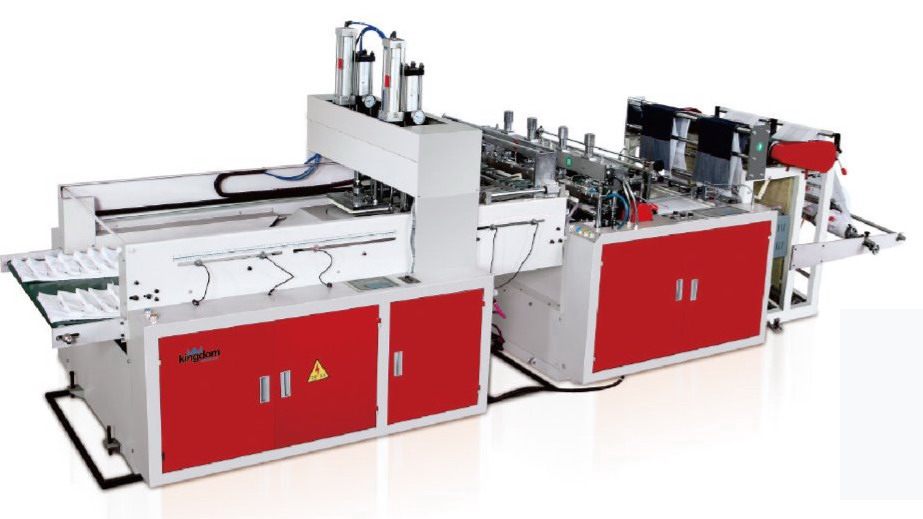

Plastic bag making machine technical Parameter :
Model: SHXJ-A600 SHXJ-A700 SHXJ-A800 SHXJ-A900 SHXJ-A1000
width of sealing &cutting: 580 mm 680 mm 780 mm 880 mm 980 mm
length of sealing & cutting: 700 mm 1200 mm 1200 mm 1400 mm 1600 mm
speed of bag-making (pc/min): 240-400 240-400 60-100 50-100 40-100
Kingdom Machine Factory manufacture and supply automatic T-shirt bag making machine,Plastic trash bag machine,blown film extrusion,film blowing machine,flexographic printing machine,rotogravure printing machine,PP drinking straw machine,stretch film machine in Dubai,Ajman,Umm al-Quwain,Abu Dhabi,Sharjah,Fujairah,United Arab Emirates.
Kingdom Machine co,ltd Mobile:0086-1358812663; 0086-13088651008;
Whatsapp/Viber/tango:+86-13958812663;
Tel.:0086-577-66881211; Fax:0086-577-66881311;
sale@kingdommachine.com; Kingdombillwang@hotmail.com;
Skype:kingdombillwang www.kingdommachine.com;
Address:Ruian Economic Zone,Wenzhou,China
How to safely install LED strip lights
LED light strip installation process
1. Check the light strip: First, determine the length to be installed, and then take an integer and intercept it. This kind of light strip has a unit of 1 meter. It will not affect the circuit until it is cut off at the notch. If it is cut at will, one unit will not light up.
Example: If a length of 7.5 meters is required, the light strip needs to be cut to 8 meters.
2. Link plug: The LED itself is a diode, driven by DC, so it has positive and negative poles. If the positive and negative poles are connected reversely, it will be in an insulated state and the light strip will not light up. If the connecting plug does not light up when it is powered on, you only need to disassemble the other end of the light strip.
3. Placement of light strips: The light strips are packaged in trays. The newly disassembled light strips will be twisted and difficult to install. You can straighten them first and then put them into the light trough. Since the light strip emits light from one side, uneven light and dark will appear if it is placed unevenly. Be careful especially around corners.
How to install LED light strips
1. Indoor installation: When LED light strips are used for indoor decoration, installation is very simple because they do not have to withstand wind and rain. Take the LED light strips produced by Guanghong Electronics as an example. Each LED light strip has self-adhesive 3m double-sided tape on the back. During installation, you can directly peel off the sticker on the surface of the 3m double-sided tape, and then fix the light strip where needed. Where to install, just press it flat with your hands.
2. Outdoor installation: Outdoor installation will be exposed to wind and rain. If 3m glue is used to fix it, the 3m glue will decrease over time and cause the LED light strip to fall off. Therefore, outdoor installation often uses card slots to fix it. Where cutting and connection are required, the method is the same as for indoor installation, except that additional waterproof glue is required to consolidate the waterproof effect of the connection points.
3. Power connection method: The general voltage of LED light strips is DC 12v, so a switching power supply is required. The size of the power supply is determined according to the power and connection length of the LED light strips. If you do not want each LED light strip to be controlled by a power supply, you can purchase a relatively high-power switching power supply as the main power supply, and then connect all the input power supplies of all LED light strips in parallel (if the wire size is not enough, you can extend it separately). All are powered by the main switching power supply. The advantage of this is that it can be controlled centrally. The inconvenience is that it cannot achieve the lighting effect and switch control of a single LED light strip. The specific method can be measured by yourself.
4. Controller connection method: LED marquee strips and RGB full-color strips require a controller to achieve changing effects, and the control distance of each controller is different. Generally speaking, the control distance of a simple controller is 10 to 15 meters, the control distance of the remote controller is 15 to 20 meters, and the longest distance can be controlled to 30 meters. If the connection distance of the LED light strip is long and the controller cannot control such a long light strip, then a power amplifier is needed for tapping.
Things to note when installing LED light strips:
1) Do not turn on the power to light up the LED light strips before the entire roll of LED light strips is removed from the packaging or piled up;
2) When the LED light strip needs to be cut according to the length of the on-site installation, the light strip can only be cut at the place marked with scissors, otherwise one of the units will not light up. Generally, the length of each unit is 1.5-2 meters;
3) When connecting to the power supply or connecting two light strips in series, first bend the head of the Licai lamp to the left and right to expose about 2-3mm of the wires in the light strip. Use scissors to cut it clean without leaving burrs, and then use a male needle to connection to avoid short circuit;
4) Only LED colorful light strips with the same specifications and the same voltage can be connected in series, and the total length of the series connection cannot exceed the maximum allowable length;
5) When LED light strips are connected in series, try to light one section after each connection, so as to promptly find out whether the positive and negative poles are connected incorrectly and whether the light emission direction of each section of light strips is consistent;
6) The end of the light strip must be put on a PVC tail plug, and then tied tightly with a clamp tape, and then sealed around the interface with neutral glass glue to ensure safety.
7) Because LED has unidirectional conductivity, if you use a power cord with an AC-DC converter, you should first conduct a power-on test after completing the power connection to confirm that the positive and negative poles are connected correctly before putting it into use.
Dekingled.com is a professional LED strip light manufacturer that provides LED strip light wholesale, providing high-quality, cost-effective LED light strips, LED power supplies and LED modules.
1. Check the light strip: First, determine the length to be installed, and then take an integer and intercept it. This kind of light strip has a unit of 1 meter. It will not affect the circuit until it is cut off at the notch. If it is cut at will, one unit will not light up.
Example: If a length of 7.5 meters is required, the light strip needs to be cut to 8 meters.
2. Link plug: The LED itself is a diode, driven by DC, so it has positive and negative poles. If the positive and negative poles are connected reversely, it will be in an insulated state and the light strip will not light up. If the connecting plug does not light up when it is powered on, you only need to disassemble the other end of the light strip.
3. Placement of light strips: The light strips are packaged in trays. The newly disassembled light strips will be twisted and difficult to install. You can straighten them first and then put them into the light trough. Since the light strip emits light from one side, uneven light and dark will appear if it is placed unevenly. Be careful especially around corners.
How to install LED light strips
1. Indoor installation: When LED light strips are used for indoor decoration, installation is very simple because they do not have to withstand wind and rain. Take the LED light strips produced by Guanghong Electronics as an example. Each LED light strip has self-adhesive 3m double-sided tape on the back. During installation, you can directly peel off the sticker on the surface of the 3m double-sided tape, and then fix the light strip where needed. Where to install, just press it flat with your hands.
2. Outdoor installation: Outdoor installation will be exposed to wind and rain. If 3m glue is used to fix it, the 3m glue will decrease over time and cause the LED light strip to fall off. Therefore, outdoor installation often uses card slots to fix it. Where cutting and connection are required, the method is the same as for indoor installation, except that additional waterproof glue is required to consolidate the waterproof effect of the connection points.
3. Power connection method: The general voltage of LED light strips is DC 12v, so a switching power supply is required. The size of the power supply is determined according to the power and connection length of the LED light strips. If you do not want each LED light strip to be controlled by a power supply, you can purchase a relatively high-power switching power supply as the main power supply, and then connect all the input power supplies of all LED light strips in parallel (if the wire size is not enough, you can extend it separately). All are powered by the main switching power supply. The advantage of this is that it can be controlled centrally. The inconvenience is that it cannot achieve the lighting effect and switch control of a single LED light strip. The specific method can be measured by yourself.
4. Controller connection method: LED marquee strips and RGB full-color strips require a controller to achieve changing effects, and the control distance of each controller is different. Generally speaking, the control distance of a simple controller is 10 to 15 meters, the control distance of the remote controller is 15 to 20 meters, and the longest distance can be controlled to 30 meters. If the connection distance of the LED light strip is long and the controller cannot control such a long light strip, then a power amplifier is needed for tapping.
Things to note when installing LED light strips:
1) Do not turn on the power to light up the LED light strips before the entire roll of LED light strips is removed from the packaging or piled up;
2) When the LED light strip needs to be cut according to the length of the on-site installation, the light strip can only be cut at the place marked with scissors, otherwise one of the units will not light up. Generally, the length of each unit is 1.5-2 meters;
3) When connecting to the power supply or connecting two light strips in series, first bend the head of the Licai lamp to the left and right to expose about 2-3mm of the wires in the light strip. Use scissors to cut it clean without leaving burrs, and then use a male needle to connection to avoid short circuit;
4) Only LED colorful light strips with the same specifications and the same voltage can be connected in series, and the total length of the series connection cannot exceed the maximum allowable length;
5) When LED light strips are connected in series, try to light one section after each connection, so as to promptly find out whether the positive and negative poles are connected incorrectly and whether the light emission direction of each section of light strips is consistent;
6) The end of the light strip must be put on a PVC tail plug, and then tied tightly with a clamp tape, and then sealed around the interface with neutral glass glue to ensure safety.
7) Because LED has unidirectional conductivity, if you use a power cord with an AC-DC converter, you should first conduct a power-on test after completing the power connection to confirm that the positive and negative poles are connected correctly before putting it into use.
Dekingled.com is a professional LED strip light manufacturer that provides LED strip light wholesale, providing high-quality, cost-effective LED light strips, LED power supplies and LED modules.
Overwhelmed by the Complexity of ? This May Help
 Reputable IT Partner Transform Small Company Operations
In today's busy digital landscape, small businesses are progressively identified for their significant contributions to the international economic situation. Nevertheless, much of these business deal with distinct challenges when it pertains to technology and IT management. Read more about in this website. To conquer these difficulties, partnering with a trustworthy IT provider can be a game-changer, providing assistance and remedies that change procedures, improve processes, and inevitably drive development. Learn more about in this homepage.
Collaborating with a trustworthy IT companion provides local business accessibility to essential tools and innovations that can drastically enhance efficiency. View more about in this page. From cloud computing to data management, the right IT services allow organizations to automate tasks, enhance communication, and gain valuable understandings via data analytics. Check here for more info. This not only saves time but likewise allows owners to concentrate on core service activities, fostering technology and increasing their reach in the marketplace.
Moreover, a reliable IT companion aids local business remain ahead of the curve in regards to cybersecurity. Discover more about in this link. As cyber dangers end up being extra sophisticated, it's important for companies of all sizes to shield sensitive details and customer data. Check it out! in this site. An experienced IT service provider proactively applies robust security actions, conducts regular audits, and provides training to staff, making certain that security protocols are respected and kept. Read here for more info. This assurance enables local business owner to operate with confidence, recognizing their electronic possessions are secured. Click here for more updates.
In addition, a strong partnership with an IT supplier supplies flexibility and scalability, crucial for small companies looking to grow. View here for more details. Whether it's upgrading existing systems or integrating brand-new options, a trusted IT companion can adjust to a business's changing needs and offer. personalized strategies for expansion. Click for more info. This tailored strategy not only maximizes the return on investment yet additionally lines up technology with the business's tactical goals, establishing the stage for sustained success. Read more about in this website.
Finally, developing a partnership with a trustworthy IT supplier can exceptionally change Check here for more info. local business operations. Learn more about in this homepage. By improving efficiency, enhancing safety and security, and giving scalable options, such partnerships lead the way for development and development. View more about in this page. As the electronic landscape remains to advance, local business that buy trustworthy IT sustain will certainly be much better placed to grow in an increasingly affordable environment. Check here for more info.
On : My Rationale Explained
Modular homes have become increasingly popular in recent years, and for good reason. These homes offer a unique combination of quality, efficiency, and affordability that is hard to find in traditional site-built homes. If you are considering building a new home in New Jersey, you should definitely take a closer look at modular homes NJ. In this article, you will learn about the benefits and advantages of modular homes, as well as the process of building one.
One of the biggest advantages of modular homes is their construction process. Unlike traditional site-built homes, which are built from the ground up on the building site, modular homes are built in a factory. This means that the construction process is faster, more efficient, and less prone to delays due to weather or other external factors. The factory-built modules are then transported to the building site, where they are assembled and finished. This process can save you time and money, as it reduces the risk of construction delays and cost overruns.
Another benefit of modular homes is their quality. Because they are built in a factory, modular homes are subject to stricter quality control standards than traditional site-built homes. The factory environment allows for more precise construction and inspection, which means that modular homes are less likely to have defects or other quality issues. Additionally, modular homes are built with the same materials and to the same standards as traditional site-built homes, so you can expect the same level of quality and durability.
If you are considering building a modular home in New Jersey, you should start by researching the different types of homes available. Modular homes come in a wide range of styles and sizes, from small, cozy cottages to large, luxurious mansions. You can choose from a variety of floor plans, or work with a designer to create a custom plan that meets your specific needs and preferences. You should also consider the type of land you will be building on, as well as any local zoning or building regulations that may apply.
The cost of a modular home is another important consideration. While the upfront cost of a modular home may be higher than that of a traditional site-built home, it can be more cost-effective in the long run. Modular homes are often more energy-efficient than traditional homes, which means that you can save money on your utility bills. They are also less prone to maintenance and repair issues, which can save you money and hassle over time. Additionally, modular homes can appreciate in value over time, just like traditional site-built homes.
In terms of financing, modular homes are treated the same as traditional site-built homes. You can secure a mortgage for a modular home through a bank or other lender, and you may be eligible for government-backed loans or other special financing programs. You should shop around to compare rates and terms, and consider working with a lender that has experience with modular homes.
The construction process for a modular home typically begins with a site preparation phase. This involves clearing and grading the land, as well as installing any necessary utilities such as water, sewer, and electricity. Next, the factory-built modules are delivered to the site, where they are assembled and connected to the foundation. The modules are then finished with exterior and interior finishes, such as siding, roofing, and flooring. Finally, the home is inspected and certified to ensure that it meets all local building codes and regulations.
If you are considering building a modular home in New Jersey, you should also think about the local building codes and regulations that apply. Modular homes must meet the same building codes as traditional site-built homes, and you may need to obtain special permits or approvals before construction can begin. You should work with a reputable builder or contractor who has experience with modular homes and is familiar with the local regulations and requirements.
The popularity of modular homes NJ is on the rise, and for good reason. These homes offer a unique combination of quality, efficiency, and affordability that is hard to find in traditional site-built homes. By doing your research and working with a reputable builder or contractor, you can create a beautiful and functional home that meets your needs and budget. Whether you are a first-time homebuyer or an experienced homeowner, a modular home can be a great option for you. You can expect to save time and money, while also enjoying the benefits of a high-quality, energy-efficient home.
In conclusion, modular homes NJ are a great option for anyone looking to build a new home in New Jersey. With their efficient construction process, high-quality materials, and customizable designs, modular homes offer a unique combination of benefits that are hard to find in traditional site-built homes. By considering factors such as cost, financing, and local building codes, you can make an informed decision about whether a modular home is right for you. With the right planning and research, you can create a beautiful and functional home that meets your needs and budget, and provides you with a comfortable and secure place to live for years to come.
The process of building a modular home can be complex, but it is also highly rewarding. You will have the opportunity to work with a designer to create a custom floor plan that meets your specific needs and preferences. You will also have the chance to select the materials and finishes that you want to use in your home, from the type of flooring to the style of cabinets. By taking an active role in the design and construction process, you can ensure that your modular home turns out exactly as you envisioned it.
You should also consider the environmental benefits of modular homes. Because they are built in a factory, modular homes generate less waste and have a lower environmental impact than traditional site-built homes. They are also more energy-efficient, which means that you can save money on your utility bills and reduce your carbon footprint. Additionally, many modular homes are built with sustainable materials and practices, which can help to minimize their impact on the environment.
Overall, modular homes NJ are a great option for anyone looking to build a new home in New Jersey. With their efficient construction process, high-quality materials, and customizable designs, modular homes offer a unique combination of benefits that are hard to find in traditional site-built homes. By doing your research and working with a reputable builder or contractor, you can create a beautiful and functional home that meets your needs and budget, and provides you with a comfortable and secure place to live for years to come. You can expect to save time and money, while also enjoying the benefits of a high-quality, energy-efficient home.
When it comes to maintenance and repair, modular homes are generally easier to work with than traditional site-built homes. Because they are built in a factory, modular homes are subject to stricter quality control standards, which means that they are less likely to have defects or other quality issues. Additionally, modular homes are designed to be more durable and long-lasting than traditional homes, which means that they require less maintenance and repair over time. You can also expect to save money on your utility bills, as modular homes are often more energy-efficient than traditional homes.
In terms of customization, modular homes offer a wide range of options and possibilities. You can work with a designer to create a custom floor plan that meets your specific needs and preferences, and you can choose from a variety of materials and finishes to use in your home. You can also add custom features and upgrades, such as a fireplace or a home theater system, to make your home truly unique and special. By taking an active role in the design and
Looking On The Bright Side of
If You Think You Get , Then This Might Change Your Mind
Smart Tips For Finding
 The Art of Wearing Lace Front Wigs: A Guide for Provo Utah Residents
As a resident of Provo, Utah, you're likely no stranger to the world of wigs. Whether you're looking to add some extra flair to your everyday look or you're dealing with hair loss due to medical conditions, wigs can be a fantastic solution. Among the many types of wigs available, lace front wigs have gained immense popularity in recent years. But what exactly are lace front wigs, and how do you wear them? In this article, we'll delve into the world of lace front wigs, exploring their benefits, how to choose the right one, and some expert tips on how to style them.
What are Lace Front Wigs?
Lace front wigs are a type of wig that features a thin, lace-like material along the front edge of the wig. This lace is designed to mimic the natural hairline, creating a seamless blend between the wig and your own hair. The lace front is typically hand-tied to the wig cap, allowing for a natural-looking hairline and a more realistic appearance. Lace front wigs are available in a wide range of styles, from short and sassy to long and luscious, making them a versatile option for anyone looking to add some extra glamour to their look.
Benefits of Lace Front Wigs
So, what makes lace front wigs so popular? For one, they offer a level of realism that's hard to match with other types of wigs. The lace front creates a natural-looking hairline, making it difficult to tell where your own hair ends and the wig begins. This can be especially beneficial for those dealing with hair loss due to medical conditions, as it allows them to maintain a sense of normalcy and confidence. Additionally, lace front wigs are often more comfortable to wear than other types of wigs, as they don't require adhesive or tape to secure them in place.
Choosing the Right Lace Front Wig
When it comes to choosing the right lace front wig, there are a few key factors to consider. First and foremost, you'll want to think about the style you're going for. Do you want a short, sassy look or a long, flowing mane? Consider your face shape, hair type, and personal style when making your decision. You'll also want to think about the color of the wig, as well as the material it's made from. Human hair wigs, for example, are often more expensive than synthetic wigs, but they can be styled with heat tools and last longer.
Styling Your Lace Front Wig
Once you've chosen the perfect lace front wig, it's time to style it. The good news is that lace front wigs are relatively easy to style, especially if you're used to working with your own hair. You can use a comb or brush to style the wig, and you can even use heat tools like flat irons or curling irons to add some extra texture and volume. When it comes to securing the wig in place, you can use a wig cap or a wig adhesive, depending on your preference.
Tips for Wearing Lace Front Wigs
Wearing a lace front wig can take some getting used to, especially if you're new to wearing wigs. Here are a few tips to help you get the most out of your lace front wig:
* Start with a small amount of adhesive or wig cap, and gradually add more as needed. This will help prevent the wig from slipping or falling off.
* Use a wig brush or comb to style the wig, rather than your fingers. This will help prevent tangling and knotting.
* Avoid using heat tools too close to the lace front, as this can cause damage or discoloration.
* Consider getting a professional wig fitting to ensure the wig is properly secured and styled.
Common Mistakes to Avoid
While lace front wigs are generally easy to wear, there are a few common mistakes to avoid. Here are a few to keep in mind:
* Not securing the wig properly. Make sure to use enough adhesive or wig cap to keep the wig in place.
* Not styling the wig correctly. Use a wig brush or comb to style the wig, and avoid using heat tools too close to the lace front.
* Not taking care of the wig. Regularly wash and condition the wig to keep it looking its best.
Conclusion
Lace front wigs are a fantastic option for anyone looking to add some extra glamour to their look. With their natural-looking hairline and realistic appearance, they're perfect for special occasions or everyday wear. By following the tips and tricks outlined in this article, you can ensure a comfortable and stylish fit. Whether you're dealing with hair loss due to medical conditions or you're simply looking to try something new, lace front wigs are definitely worth considering. So why not give them a try? With a little practice and patience, you'll be rocking your lace front wig in no time.
What Do You Know About
Doing The Right Way
What Do You Know About
As a business owner in Highlands, FL, you understand the importance of maintaining a clean and healthy workspace for your employees and customers. A clean and well-maintained office not only boosts morale and productivity but also reflects positively on your company's image. However, with the demands of running a business, it can be challenging to find the time and resources to keep your commercial space clean and tidy. This is where commercial cleaning services come in.
1. Benefits of Commercial Cleaning
Commercial cleaning services offer a range of benefits that can help you maintain a healthy and productive workspace. Some of the benefits include:
* Improved air quality: Regular cleaning helps to remove dust, dirt, and other pollutants from the air, improving the overall air quality and reducing the risk of respiratory problems.
* Reduced absenteeism: A clean and well-maintained workspace can help reduce absenteeism due to illness, as employees are less likely to fall ill in a clean environment.
* Increased productivity: A clean and organized workspace can help employees stay focused and productive, leading to increased efficiency and better results.
* Enhanced customer experience: A clean and well-maintained office can also improve the customer experience, as customers are more likely to perceive your business as professional and reputable.
2. Types of Commercial Cleaning Services
Commercial cleaning services can be customized to meet the specific needs of your business. Some common types of commercial cleaning services include:
* Daily cleaning: This type of service involves daily cleaning and maintenance of your office, including tasks such as trash removal, dusting, and vacuuming.
* Weekly cleaning: This type of service involves weekly cleaning and maintenance of your office, including tasks such as deep cleaning of high-traffic areas, restrooms, and kitchens.
* Special event cleaning: This type of service involves specialized cleaning and maintenance for special events, such as conferences, parties, and meetings.
* Construction cleaning: This type of service involves cleaning and maintenance of construction sites, including tasks such as removing debris, dust, and dirt.
3. How to Choose the Right Commercial Cleaning Service
Choosing the right commercial cleaning service can be a daunting task, especially with the many options available. Here are some tips to help you choose the right service for your business:
* Research and compare: Research different commercial cleaning services and compare their services, prices, and reviews.
* Check credentials: Check the credentials of the cleaning service, including their licenses, certifications, and insurance.
* Ask questions: Ask the cleaning service questions about their services, including what they will do, how they will do it, and what they will charge.
* Check references: Check references from previous clients to get an idea of the quality of service you can expect.
4. What to Expect from a Commercial Cleaning Service
When you hire a commercial cleaning service, you can expect a range of services, including:
* Cleaning of high-traffic areas, such as hallways, stairwells, and break rooms
* Cleaning of restrooms, including sinks, toilets, and mirrors
* Cleaning of kitchens, including appliances, counters, and floors
* Cleaning of offices, including desks, chairs, and windows
* Removal of trash and recyclables
* Disinfecting and sanitizing of surfaces
5. How to Maintain a Clean and Healthy Workspace
Maintaining a clean and healthy workspace is an ongoing process that requires regular cleaning and maintenance. Here are some tips to help you maintain a clean and healthy workspace:
* Create a cleaning schedule: Create a cleaning schedule that outlines the tasks that need to be completed and when they need to be completed.
* Assign cleaning tasks: Assign cleaning tasks to employees or cleaning staff to ensure that tasks are completed regularly.
* Provide cleaning supplies: Provide cleaning supplies, such as soap, paper towels, and trash bags, to ensure that employees have what they need to clean.
* Encourage employee participation: Encourage employee participation in cleaning and maintenance tasks to promote a sense of ownership and responsibility.
6. The Importance of Green Cleaning
Green cleaning is an important consideration for businesses, as it can help reduce the environmental impact of cleaning products and practices. Here are some benefits of green cleaning:
* Reduced environmental impact: Green cleaning products and practices can help reduce the environmental impact of cleaning, including reducing waste, conserving water, and reducing energy consumption.
* Improved indoor air quality: Green cleaning products and practices can help improve indoor air quality by reducing the use of harsh chemicals and toxins.
* Cost savings: Green cleaning products and practices can help reduce costs by reducing waste and conserving resources.
7. How to Implement Green Cleaning in Your Business
Implementing green cleaning in your business can be a simple and effective way to reduce your environmental impact and improve indoor air quality. Here are some tips to help you implement green cleaning in your business:
* Choose green cleaning products: Choose cleaning products that are certified as green or eco-friendly, such as those that are biodegradable, non-toxic, and free of harsh chemicals.
* Implement sustainable practices: Implement sustainable practices, such as reducing water consumption, conserving energy, and reducing waste.
* Train employees: Train employees on the importance of green cleaning and provide them with the necessary training and resources to implement green cleaning practices.
8. The Benefits of Regular Maintenance
Regular maintenance is an important part of commercial cleaning, as it can help prevent problems and reduce the need for costly repairs. Here are some benefits of regular maintenance:
* Prevents problems: Regular maintenance can help prevent problems, such as leaks, clogs, and equipment failures, by identifying and addressing issues before they become major problems.
* Reduces costs: Regular maintenance can help reduce costs by reducing the need for costly repairs and replacements.
* Improves efficiency: Regular maintenance can help improve efficiency by ensuring that equipment and systems are functioning properly and efficiently.
9. Conclusion
Commercial cleaning is an important part of maintaining a healthy and productive workspace. By choosing the right commercial cleaning service, implementing green cleaning practices, and maintaining a clean and healthy workspace, you can improve the overall health and well-being of your employees and customers. Remember to research and compare different commercial cleaning services, check credentials, ask questions, and check references to ensure that you choose the right service for your business.
A Simple Plan:
How I Became An Expert on
Getting To The Point –
The Rise of Modular Homes in New Jersey: A Sustainable and Affordable Housing SolutionAs the demand for affordable and sustainable housing continues to grow, modular homes in New Jersey are gaining popularity as a viable alternative to traditional construction methods. Modular homes, also known as prefabricated homes, are built in a factory and then transported to the building site, where they are assembled. This innovative approach to homebuilding offers numerous benefits, including reduced construction time, lower costs, and increased energy efficiency.
One of the primary advantages of modular homes is their speed of construction. Traditional stick-built homes can take months or even years to complete, whereas modular homes can be built in a matter of weeks. This is because the majority of the construction process takes place in a factory, where workers can work simultaneously on multiple modules without being hindered by weather conditions or labor shortages. Once the modules are complete, they are transported to the building site, where they are assembled and connected to form a complete home.
Another significant benefit of modular homes is their cost-effectiveness. Because the majority of the construction process takes place in a factory, labor costs are significantly reduced. Additionally, the controlled environment of the factory allows for more efficient use of materials, resulting in lower waste and reduced costs. According to the National Association of Home Builders, modular homes can be up to 20% more cost-effective than traditional stick-built homes.
Modular homes are also designed with energy efficiency in mind. Because they are built in a factory, manufacturers can incorporate advanced insulation and energy-efficient features, such as solar panels and tankless water heaters, into the design. This results in homes that are not only more affordable but also more environmentally friendly. In fact, the U.S. Department of Energy estimates that modular homes can be up to 30% more energy-efficient than traditional homes.
In addition to their environmental benefits, modular homes are also designed with durability in mind. Because they are built in a factory, manufacturers can ensure that every module meets strict quality control standards. This results in homes that are built to last, with fewer defects and a longer lifespan. According to the National Association of Home Builders, modular homes can last up to 50 years or more, compared to traditional homes which may only last 20-30 years.
Modular homes are also highly customizable, allowing homeowners to design their dream home with ease. Because the majority of the construction process takes place in a factory, manufacturers can incorporate a wide range of design options, from different floor plans and exterior finishes to advanced technology and smart home features. This results in homes that are tailored to the individual needs and preferences of each homeowner.
Despite their many benefits, modular homes are often misunderstood or stigmatized. Many people assume that modular homes are inferior to traditional homes, or that they are only suitable for low-income or temporary housing. However, this could not be further from the truth. Modular homes are designed to be high-quality, sustainable, and affordable, making them an attractive option for homeowners of all backgrounds and income levels.
In New Jersey, modular homes are becoming increasingly popular, particularly in areas where traditional construction methods are slow or expensive. The state's dense population and limited land availability make it an ideal location for modular homes, which can be built quickly and efficiently in a factory. Additionally, New Jersey's strict building codes and regulations make it an attractive location for modular home manufacturers, who can ensure that their products meet the highest standards of quality and safety.
In conclusion, modular homes in New Jersey offer a sustainable and affordable housing solution that is gaining popularity across the state. With their speed of construction, cost-effectiveness, energy efficiency, durability, and customizability, modular homes are an attractive option for homeowners of all backgrounds and income levels. As the demand for affordable and sustainable housing continues to grow, modular homes are poised to play a major role in shaping the future of homebuilding in New Jersey and beyond.
What I Can Teach You About
- Getting Started & Next Steps
A Brief Rundown of
"Unlocking the Secrets of Fetal Development: The Power of 3D Sonograms in Fort Worth, TX"As you await the arrival of your little one, you're likely filled with excitement and anticipation. One of the most significant milestones in your pregnancy journey is the moment you get to see your baby's face and features for the first time. This experience is made possible by 3D sonograms, a revolutionary technology that has transformed the way we visualize and understand fetal development. In this article, we'll delve into the world of 3D sonograms, exploring their benefits, how they work, and what you can expect during your 3D sonogram appointment in Fort Worth, TX.
A 3D sonogram, also known as a 3D ultrasound, is a non-invasive imaging technique that uses high-frequency sound waves to create detailed, three-dimensional images of your baby's internal structures. This technology has become increasingly popular among expectant mothers, as it provides a more comprehensive understanding of fetal development and allows for a more personalized experience during pregnancy.
During a 3D sonogram, a trained sonographer will use a transducer to emit sound waves that bounce off your baby's internal structures. These sound waves are then converted into electrical signals, which are processed by a computer to create a 3D image. The resulting image is a detailed, high-resolution picture of your baby's face, hands, and other features, giving you a unique glimpse into your baby's development.
One of the primary benefits of 3D sonograms is their ability to provide a more accurate assessment of fetal development. By visualizing your baby's internal structures, healthcare providers can identify potential issues earlier, such as congenital anomalies or growth restrictions. This early detection allows for prompt intervention and treatment, improving the overall health and well-being of your baby.
In addition to its diagnostic capabilities, 3D sonograms also offer a unique bonding experience for expectant mothers. Seeing your baby's face and features for the first time can be a life-changing moment, filled with emotions and excitement. This experience is made even more special when shared with family and friends, creating lasting memories and a deeper connection with your baby.
When scheduling a 3D sonogram appointment in Fort Worth, TX, it's essential to choose a reputable and experienced provider. Look for a facility that uses state-of-the-art equipment and employs trained sonographers who are knowledgeable about fetal development and 3D sonogram technology. Your provider should also be able to answer any questions you may have and provide guidance on what to expect during the appointment.
During your 3D sonogram appointment, you can expect a comfortable and relaxing experience. You'll typically be asked to lie on an examination table, where a trained sonographer will apply a small amount of gel to your abdomen. The sonographer will then use the transducer to emit sound waves, which will be converted into a 3D image on a monitor.
As you view the 3D image, you may be surprised by the level of detail and clarity. You'll be able to see your baby's face, hands, and other features in stunning high definition, giving you a unique glimpse into your baby's development. Your sonographer will also be able to point out specific features and answer any questions you may have, providing valuable insights into your baby's growth and development.
In conclusion, 3D sonograms are a powerful tool for expectant mothers, offering a unique glimpse into fetal development and a more personalized experience during pregnancy. By choosing a reputable provider and understanding what to expect during your appointment, you can make the most of this exciting experience. Whether you're looking to bond with your baby or gain a deeper understanding of fetal development, 3D sonograms are an invaluable resource for expectant mothers in Fort Worth, TX.
Why Aren't As Bad As You Think
Why No One Talks About Anymore
The Key Elements of Great
As one of the most populous and densely populated boroughs in New York City, Brooklyn is a hub of activity, with millions of residents, businesses, and visitors calling it home. With this level of activity comes a significant amount of waste, which can quickly become overwhelming if not properly managed. That's where trash service in Brooklyn comes in, playing a crucial role in keeping the borough clean, safe, and healthy. In this article, we'll delve into the world of trash service in Brooklyn, exploring its importance, challenges, and innovations.
1. The Importance of Trash Service in Brooklyn
Trash service in Brooklyn is more than just a necessary evil; it's a vital component of the borough's infrastructure. Without a reliable and efficient trash collection system, the streets would quickly become littered with garbage, posing health risks to residents and visitors alike. Trash service also helps to maintain the aesthetic appeal of Brooklyn's neighborhoods, keeping them clean and attractive to residents and businesses. Furthermore, a well-functioning trash service helps to reduce the risk of pest infestations, rodent problems, and other environmental issues that can arise from poor waste management.
2. The Challenges of Trash Service in Brooklyn
Despite its importance, trash service in Brooklyn faces numerous challenges. One of the primary concerns is the sheer volume of waste generated by the borough's residents and businesses. With millions of people producing thousands of tons of trash every day, the pressure on the trash service system is immense. Additionally, Brooklyn's aging infrastructure and limited resources can make it difficult to maintain a reliable and efficient trash collection system. Other challenges include navigating the complex regulatory environment, managing public perception, and addressing the growing problem of contamination in recyclables.
3. Innovations in Trash Service in Brooklyn
Despite the challenges, trash service in Brooklyn is evolving to meet the needs of the borough's residents and businesses. One of the most significant innovations is the increasing use of technology to improve efficiency and reduce costs. For example, some trash service providers are using GPS tracking and data analytics to optimize their routes and reduce fuel consumption. Others are implementing smart waste management systems that allow residents to report issues and request pickups online or through mobile apps.
4. The Role of Residents in Trash Service in Brooklyn
While trash service providers play a critical role in keeping Brooklyn clean, residents also have a vital part to play. By taking a few simple steps, residents can help to ensure that their trash is collected efficiently and effectively. For example, residents can make sure to place their trash and recyclables in the correct bins, keep their streets clean by disposing of litter properly, and report any issues or concerns to their trash service provider.
5. The Impact of Trash Service on Public Health in Brooklyn
Trash service in Brooklyn has a significant impact on public health in the borough. When trash is not collected regularly, it can attract pests and rodents, which can spread diseases and create unsanitary conditions. Additionally, poor waste management can lead to the spread of disease through contaminated water and air. By providing a reliable and efficient trash collection system, trash service providers can help to reduce the risk of public health issues and create a safer and healthier environment for residents and visitors.
6. The Economic Benefits of Trash Service in Brooklyn
Trash service in Brooklyn also has significant economic benefits. By keeping the borough clean and attractive, trash service providers can help to attract new businesses and residents, boosting the local economy. Additionally, a well-functioning trash service can reduce the risk of costly environmental damage and public health issues, which can save taxpayers millions of dollars in the long run.
7. The Environmental Impact of Trash Service in Brooklyn
Trash service in Brooklyn also has a significant environmental impact. By reducing the amount of waste sent to landfills and increasing recycling rates, trash service providers can help to reduce greenhouse gas emissions and mitigate the effects of climate change. Additionally, a well-functioning trash service can help to protect local waterways and ecosystems by reducing the amount of pollution and waste that enters the environment.
8. The Future of Trash Service in Brooklyn
As Brooklyn continues to grow and evolve, the future of trash service in the borough will likely be shaped by technological innovations, changing public attitudes, and shifting environmental priorities. One potential trend is the increasing use of alternative waste management methods, such as composting and anaerobic digestion. Another is the development of more sustainable and environmentally-friendly trash collection vehicles and equipment. By embracing these innovations and working together with residents and businesses, trash service providers can help to create a cleaner, safer, and healthier Brooklyn for generations to come.
9. Conclusion
Trash service in Brooklyn is a vital component of the borough's infrastructure, playing a critical role in keeping the streets clean, safe, and healthy. While it faces numerous challenges, innovations in technology, public education, and environmental sustainability are helping to improve the efficiency and effectiveness of trash service in the borough. By working together, residents, businesses, and trash service providers can help to create a cleaner, safer, and healthier Brooklyn for all.
How to Achieve Maximum Success with
Looking On The Bright Side of
On : My Thoughts Explained
Securing a visible online presence has become a cornerstone for achieving growth in the modern digital age. Search Engine Optimization (SEO) is integral to making your website more visible, driving targeted traffic, and engaging your audience effectively. Whether managing a small-scale operation or creating content for a blog, utilizing the right tools and resources can significantly enhance your SEO efforts.
Understanding the Basics of SEO
The core of SEO lies in refining your website to perform better on search engine result platforms. This process includes creating optimized content, addressing technical aspects, and offering a top-tier user experience to align with search engine standards. A well-executed SEO plan drives more than rankings-it attracts traffic that evolves into long-term supporters and customers. Click here for more helpful tips on this company.
Crucial Tools for Building SEO Success
A robust set of tools is indispensable for thriving in the digital realm. Such tools help simplify complex workflows, generate insightful data, and position you ahead of your competitors. Here's the link to learn more about the awesome product now!
Tools for Effective Keyword Research
Keywords are the backbone of any SEO plan. Make use of keyword tools to identify search phrases that have high traffic potential but face minimal competition. Using these tools guarantees that your content resonates with what your audience seeks.
Analytics and Performance Trackers
Tracking performance metrics is pivotal for understanding which aspects of your site are successful. Platforms designed for performance tracking offer insights into user actions, bounce percentages, and conversion routes. Armed with this data, you can fine-tune your approach for improved outcomes. For more info on this product view here!
Tools for Conducting SEO Audits
Regular website audits are vital to detecting errors that affect ranking potential. SEO audits help you detect problems like incomplete metadata, lengthy loading durations, or non-functional links. This homepage has all the info.
Backlink Management Tools for SEO Improvement
Backlinks are endorsements that enhance your website's credibility. Utilize backlink analysis software to create an effective strategy for obtaining high-quality links. Click here for more helpful tips on these companies.
Optimizing Content with Specialized Tools
Creating content that satisfies user intent and search engine algorithms is fundamental for SEO. Content optimization platforms assist in structuring articles with strategic keywords to rank higher on SERPs.
Crucial Resources for Enhancing SEO Strategies
In addition to tools, several resources can help refine your SEO skills and stay current.
Learning Resources for SEO Strategies
Since SEO practices frequently shift, maintaining awareness of new trends is essential. Learning through courses or tutorials equips you with the latest strategies and industry standards. Click here to get even more info on the subject!
Staying Updated Through Blogs and Forums
Following trusted blogs and online forums keeps you informed about updates in search engine algorithms. Such channels provide actionable guidance for immediate application.
Leveraging SEO Case Studies and Reports
Reviewing case studies offers valuable lessons from successful SEO campaigns. Reports and analytics guide your next steps by demonstrating what works. View here for more info on this product.
Final Thoughts
Succeeding in SEO necessitates a combination of strategy, persistence, and powerful tools. Employing top-tier tools, staying current, and evolving with the industry pave the way for online success. Begin your journey by selecting essential tools and exploring diverse resources to strengthen your online presence. Here's the link to learn more about the awesome product.